

TL;DR:
- LiFePO4 batteries offer long-lasting, safe, and efficient power for outdoor use, outperforming lead-acid in cycle life and capacity. They provide stable voltage and safety features ideal for enclosed spaces, but cold weather charging and higher initial costs are limitations. Proper sizing and system setup make LiFePO4 the best choice for camping, van life, and off-grid applications.
LiFePO4 (lithium iron phosphate) batteries are the most reliable power source for outdoor use, delivering a lifespan of 3,000–5,000+ cycles, thermal stability up to 270°C, and 80–95% usable capacity. These are not marketing claims. They are measurable performance advantages that matter when you are camping in the backcountry, running an off-grid cabin, or keeping critical devices alive during an emergency. The LiFePO4 battery advantages for outdoor use come down to three things: they last longer, they are safer, and they deliver steady power when you need it most.
1. Why cycle life is the most important LiFePO4 battery advantage for outdoor use
Cycle life is the single biggest reason outdoor enthusiasts choose LiFePO4 over any other battery chemistry. A standard lead-acid battery delivers roughly 300–500 cycles before significant capacity loss. A LiFePO4 battery delivers 3,000–5,000+ cycles, translating to 10–15 years of real-world use. That difference means fewer replacements, less waste, and a battery that outlasts most of the gear you pair it with.
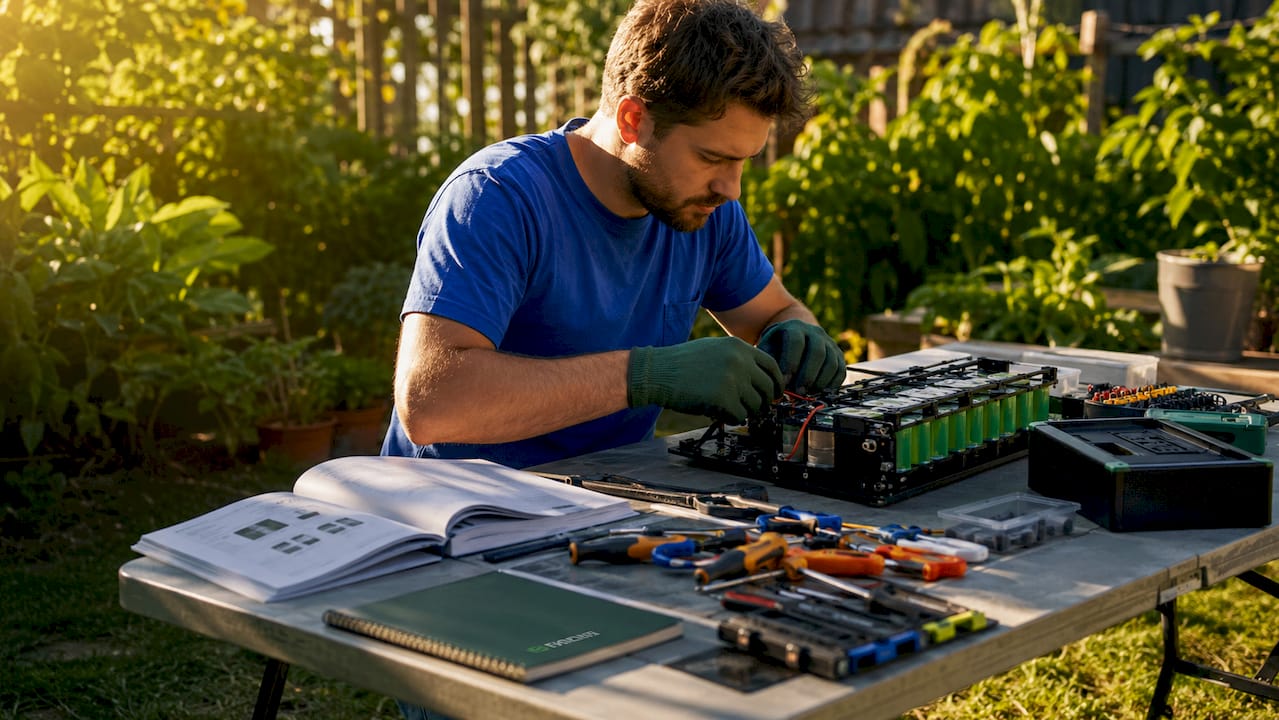
The cost math is equally compelling. LiFePO4 batteries cost roughly $0.04–$0.10 per cycle, compared to $0.30–$0.80 per cycle for lead-acid and AGM batteries. Over a decade of weekend camping trips, that gap adds up to hundreds of dollars in savings. The higher upfront price pays for itself well before the battery needs replacing.
LiFePO4 batteries provide 80–95% usable capacity versus just 50% for lead-acid. That means a 100Ah LiFePO4 battery delivers roughly the same usable energy as a 160–190Ah lead-acid bank. You carry less weight and spend less money to get the same output.
Pro Tip: When sizing your battery bank, calculate based on usable capacity, not rated capacity. A 100Ah LiFePO4 gives you 80–95Ah of real power, while a 100Ah lead-acid gives you only about 50Ah before you risk damaging it.
| Metric | LiFePO4 | Lead-Acid |
|---|---|---|
| Cycle life | 3,000–5,000+ | 300–500 |
| Usable capacity | 80–95% | ~50% |
| Cost per cycle | $0.04–$0.10 | $0.30–$0.80 |
| Typical lifespan | 10–15+ years | 2–4 years |
2. How LiFePO4 battery safety improves outdoor reliability
Safety is not a secondary concern when you are sleeping in a tent or parked in a van. LiFePO4 chemistry has a thermal runaway threshold of 270°C, compared to 150°C for standard NMC lithium-ion batteries. That 120-degree margin is the difference between a battery that handles a hot summer day and one that poses a genuine fire risk.
The iron-phosphate cathode structure does not release oxygen when it degrades. Other lithium chemistries release oxygen during thermal runaway, which feeds combustion. LiFePO4 does not, making it the preferred choice for enclosed spaces like RVs, camper vans, and off-grid cabins where ventilation is limited.
The integrated Battery Management System (BMS) handles overcharge protection, short circuit cutoff, and temperature monitoring automatically. You do not need to babysit the battery or run monthly maintenance checks the way you would with a flooded lead-acid battery. The BMS makes the entire system essentially self-managing.
“LiFePO4’s iron-phosphate cathode structure makes it the preferred choice for enclosed outdoor environments. It does not release oxygen during thermal stress, which eliminates the combustion risk that makes other lithium chemistries dangerous in confined spaces.”
Key safety advantages for outdoor settings:
- No oxygen release during thermal stress
- Thermal runaway threshold nearly double that of NMC lithium-ion
- BMS prevents overcharge, over-discharge, and short circuits
- No venting of toxic gases during normal operation or failure
- Safe for use in enclosed spaces including tents, RVs, and cabins
3. Why consistent power output matters for your outdoor gear
LiFePO4 batteries maintain steady voltage through 90% of their capacity, which means your devices receive the same quality of power whether the battery is at 95% or 15%. Lead-acid batteries sag under load, dropping voltage as they discharge. That sag causes lights to dim, inverters to cut out, and sensitive electronics to behave unpredictably.
The flat voltage curve matters most for devices that are sensitive to power fluctuations. A 12V compressor fridge, for example, runs more efficiently and lasts longer when it receives stable voltage throughout the day. Laptops, CPAP machines, and camera charging systems all benefit from the same consistency.
Pro Tip: If you run a CPAP machine or medical device off-grid, LiFePO4 is the only chemistry worth considering. Voltage sag from lead-acid batteries can trigger low-voltage shutoffs mid-use, which is both inconvenient and potentially dangerous.
Devices that benefit most from LiFePO4’s flat discharge curve:
- 12V compressor refrigerators and coolers
- Laptop and phone charging systems
- LED lighting arrays
- CPAP and portable medical devices
- Drone and camera battery chargers
Weight is another practical advantage. A 100Ah LiFePO4 battery weighs approximately 13 lbs compared to roughly 65 lbs for an equivalent lead-acid battery. That 52-pound difference is significant when you are loading a truck bed, carrying gear to a campsite, or managing weight in a van build.
4. Practical limitations of LiFePO4 batteries in outdoor settings
LiFePO4 batteries have real limitations, and knowing them upfront helps you plan a system that works reliably. The most important restriction is cold-weather charging. Charging below 32°F (0°C) causes lithium plating, which permanently reduces capacity and can damage the battery. This is not a minor inconvenience in winter camping or high-altitude off-grid setups.
Here is how to manage cold-weather charging safely:
- Choose a battery with a built-in low-temperature heating element. Many quality LiFePO4 batteries include this feature and will not accept a charge until the cells warm above freezing.
- Use an insulated battery enclosure or neoprene battery blanket in sub-freezing conditions.
- Set your solar charge controller to delay charging until ambient temperature rises above 32°F.
- Store the battery inside your vehicle or shelter overnight to keep it above the charging threshold.
- Monitor cell temperature with a BMS app if your battery supports Bluetooth monitoring.
The upfront cost is the second limitation most buyers notice. LiFePO4 batteries carry roughly a 20–40% price premium over comparable lithium-ion options and a much larger premium over lead-acid. That cost pays for itself within 2–3 years for frequent users, but it is a real barrier for occasional campers who may not reach enough cycles to justify the investment.
For ultralight backpackers, the weight advantage over lead-acid is significant, but LiFePO4 still weighs more than a small power bank. For trips where every ounce counts, a small lithium-ion power bank may serve better than a full LiFePO4 system.
5. How to choose and set up LiFePO4 batteries for your outdoor application
The right LiFePO4 setup depends on how long you are out, what you are powering, and whether you have solar charging available. A weekend camper running lights and phone charging needs a very different system than someone living off-grid full-time in a cabin.
Sizing your battery bank starts with calculating your daily energy use in watt-hours. Add up the wattage of each device and multiply by the hours you run it per day. Then divide by 0.85 to account for inverter and wiring losses. That number is your minimum daily capacity requirement.
For solar charging, pairing your LiFePO4 battery with an MPPT charge controller is the most efficient approach. MPPT controllers extract up to 30% more energy from solar panels than PWM controllers under real-world conditions. That efficiency gain matters most on cloudy days and during low-angle winter sun. You can find practical solar and battery setups that match different camping styles and budgets.
Setup recommendations by use case:
- Weekend camping: 100Ah LiFePO4 battery, 100–200W portable solar panel, MPPT controller. Powers lights, phone charging, and a small fridge for 2–3 days.
- Van life or overlanding: 200–300Ah battery bank, 300–400W rooftop solar, MPPT controller, 2,000W inverter. Supports full kitchen appliances and workstation.
- Off-grid cabin: 400Ah+ battery bank, 600W+ fixed solar array, MPPT controller, whole-home inverter. Handles refrigerators, lighting, and power tools.
- Emergency preparedness: 100–200Ah battery with a portable solar panel for recharging. Keeps communication devices, medical equipment, and lighting running during outages.
For cold climates, add a self-heating battery or a battery heating pad rated for your expected low temperature. Insulate the battery compartment with closed-cell foam to reduce heat loss overnight.
Key takeaways
LiFePO4 batteries are the best choice for outdoor power because they deliver more usable energy, last far longer, and operate safely in enclosed spaces where other chemistries pose real risks.
| Point | Details |
|---|---|
| Superior cycle life | LiFePO4 lasts 3,000–5,000+ cycles, giving 10–15 years of reliable outdoor use. |
| Higher usable capacity | 80–95% usable capacity means smaller, lighter battery banks deliver the same output as larger lead-acid banks. |
| Thermal safety advantage | A 270°C thermal runaway threshold makes LiFePO4 safe for RVs, vans, and enclosed camping spaces. |
| Flat voltage curve | Stable voltage through 90% of discharge protects sensitive electronics and keeps devices running consistently. |
| Cold-weather planning required | Charging below 32°F causes permanent damage; choose batteries with built-in heating for winter use. |
Why I trust LiFePO4 for serious outdoor power
I have used LiFePO4 batteries in setups ranging from a simple weekend camping kit to a full van build, and the single biggest surprise was how little I thought about the battery after the first week. With lead-acid, I was constantly checking voltage, worrying about sulfation, and replacing batteries every two seasons. With LiFePO4, I set up the system once and it just worked.
The safety factor is what I find most underappreciated. People focus on cycle life and cost, which are both valid. But when you are sleeping six inches from your battery in a van or tent, knowing it will not vent toxic gas or catch fire under stress is genuinely reassuring. The iron-phosphate chemistry is not just a spec sheet advantage. It changes how you feel about your setup.
The one mistake I see outdoor enthusiasts make is buying the cheapest LiFePO4 battery without checking whether it has a built-in low-temperature cutoff. That single missing feature can destroy a battery on the first cold night. Prioritize a quality BMS with low-temp protection, and the rest of the system takes care of itself. For anyone serious about LiFePO4 for camping, the chemistry is not the question anymore. The question is just which capacity fits your needs.
— Jackson
Toddra’s LiFePO4 power solutions for outdoor adventures
Choosing the right battery is only half the equation. You also need a system you can trust when you are far from a service center.
Toddra carries carefully selected LiFePO4 power solutions built for outdoor reliability, including the Jackery Battery Pack 5000 Plus, a 5,040Wh expansion battery designed for high-capacity off-grid and emergency use. Each product in Toddra’s lineup is chosen for safety certification, BMS quality, and real-world durability. Whether you are outfitting a weekend camping kit or building a full off-grid power system, Toddra’s US-based customer support team is ready to help you find the right fit. Browse the full selection at Toddra and check product specs for solar compatibility and cold-weather ratings before you buy.
FAQ
How long do LiFePO4 batteries last for outdoor use?
LiFePO4 batteries deliver 3,000–5,000+ charge cycles, which translates to 10–15 years of regular outdoor use. That lifespan far exceeds lead-acid batteries, which typically last 300–500 cycles.
Can I charge a LiFePO4 battery in cold weather?
Charging below 32°F (0°C) causes lithium plating and permanent capacity loss. Choose a battery with a built-in low-temperature heating element or use an external heating pad to keep cells above freezing before charging.
Are LiFePO4 batteries safe to use in a tent or RV?
LiFePO4 batteries are the safest lithium chemistry for enclosed spaces. Their 270°C thermal runaway threshold and non-oxygen-releasing cathode structure make them far less likely to cause fire or toxic gas exposure than other lithium chemistries.
How does LiFePO4 compare to lead-acid for off-grid camping?
LiFePO4 provides 80–95% usable capacity versus 50% for lead-acid, weighs roughly 80% less per equivalent capacity, and lasts 6–10 times longer. The higher upfront cost pays for itself within 2–3 years for frequent campers.
What size LiFePO4 battery do I need for weekend camping?
A 100Ah LiFePO4 battery paired with a 100–200W solar panel covers most weekend camping loads, including LED lighting, phone and laptop charging, and a 12V compressor fridge for 2–3 days without full sun recharging.