

TL;DR:
- Portable power is essential for digital nomads to stay productive while traveling, with solutions like power banks, power stations, and solar panels. LiFePO4 batteries, GaN chargers, and pure sine wave inverters improve safety, efficiency, and longevity of portable power setups. To comply with airline rules, nomads should carry smaller power banks and ship larger units to their destination.
Portable power is the backbone of digital nomad travel, providing the reliable, lightweight energy that keeps laptops, phones, and cameras running anywhere in the world. The role of portable power in digital nomad travel goes beyond simple convenience. Without a dependable mobile power solution, a missed deadline or a dead battery mid-call can cost you a client. Modern nomads rely on technologies like LiFePO4 batteries, GaN chargers, and solar panels to stay productive across time zones, remote coastlines, and co-working spaces alike. Understanding watt-hour capacity, airline regulations, and battery chemistry is no longer optional. It is the foundation of a functional nomad setup.
What are the key types of portable power solutions for digital nomads?
Power banks and portable power stations are the two core categories of mobile power solutions, and they serve very different purposes. A power bank is a compact, pocket-sized unit designed to top off phones, earbuds, and small tablets. A portable power station is a larger unit with AC outlets, USB-C ports, and enough capacity to run a laptop, a CPAP machine, or even a mini fridge.
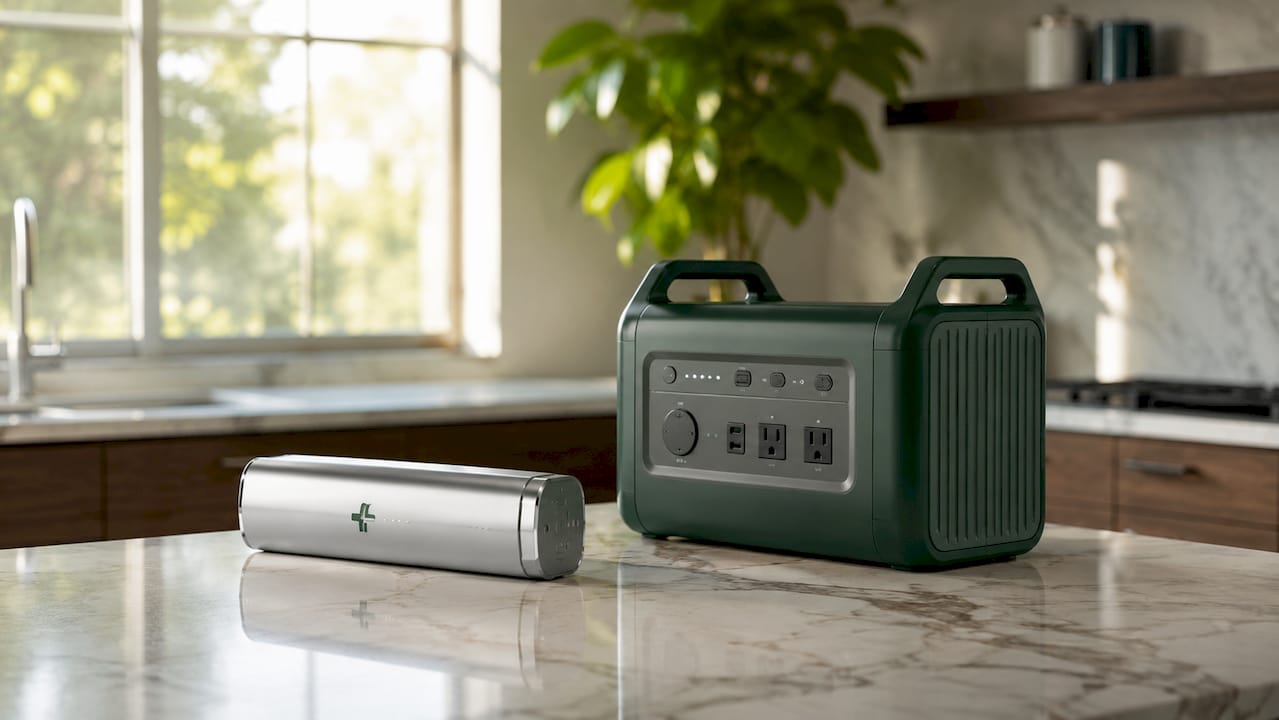
Power banks vs. power stations differ most in capacity and portability. Power banks typically range from 10,000mAh to 30,000mAh, which translates to roughly 37–111Wh. Portable power stations start at 200Wh and scale up to 2,000Wh or more for heavy off-grid use.
Solar panels add a third layer to any nomad power setup. They work best paired with a power station, feeding energy back into the battery during daylight hours. Solar panels for travel give nomads working from vans, beaches, or rural areas a renewable charging option that does not depend on grid access.
| Solution type | Typical capacity | Weight | Best use case |
|---|---|---|---|
| Power bank | 37–111Wh | 0.5–1.5 lbs | Phones, earbuds, small tablets |
| Portable power station | 200–2,000Wh | 5–40 lbs | Laptops, cameras, AC devices |
| Solar panel | N/A (input) | 2–10 lbs | Off-grid recharging of stations |
| GaN wall charger | N/A (pass-through) | 0.3–0.5 lbs | Fast charging at outlets |
Pro Tip: Always carry at least one power bank under 100Wh in your carry-on bag. It covers you during layovers and keeps your phone alive while your main station travels separately.
How to calculate your digital nomad power needs
Digital nomads require 150–300 watts daily to power a typical work setup. That figure covers a laptop, a smartphone, a wireless mouse, and a camera battery charger running across a standard workday.
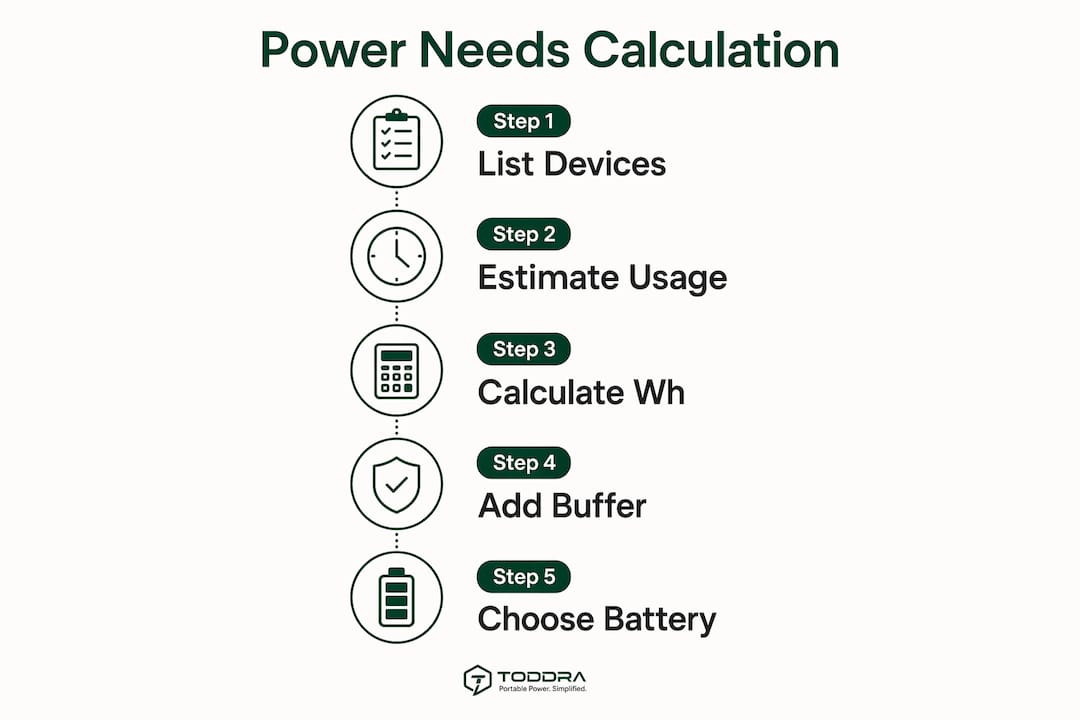
Your actual number depends on what you do for work. A writer using a lightweight laptop sits at the lower end of that range. A video editor running a high-performance laptop, an external monitor, and a hard drive array can push well past 300Wh per day. Knowing your daily draw is the first step toward choosing the right capacity.
Here is a simple way to calculate your daily power needs:
- List every device you use daily. Include your laptop, phone, camera, portable speaker, and any accessories.
- Find each device’s wattage. Check the power brick label or the manufacturer’s spec sheet.
- Estimate daily hours of use. Multiply wattage by hours to get watt-hours per device.
- Add all device totals together. This gives your baseline daily consumption.
- Multiply by 2 or 3. Planning for a 2–3 day buffer protects you from power demand spikes, cloudy solar days, or unexpected delays between charging opportunities.
For most nomads, a 500Wh station covers light users for two to three days. Heavy users or those spending four to seven days off-grid should target 1,000Wh or more. Treat your power station like a fuel tank. Arriving at 20% capacity with no outlet in sight is the nomad equivalent of running out of gas on a highway.
Pro Tip: Always overestimate your daily power needs by at least 20%. Devices draw more power under heavy load, and real-world conditions rarely match spec-sheet numbers.
What technological advancements are shaping portable power in 2026?
Three technologies define the current standard for professional nomad power setups: LiFePO4 batteries, GaN chargers, and pure sine wave inverters. Each solves a specific problem that older gear could not.
LiFePO4 batteries outperform traditional lithium-ion in two critical areas: cycle life and thermal stability. A quality LiFePO4 cell can handle thousands of charge cycles before significant capacity loss. Traditional lithium-ion cells degrade faster and carry a higher risk of thermal runaway, which is a serious concern when gear is packed tightly in a bag.
- LiFePO4 batteries: Preferred for professional remote infrastructure in 2026 due to long cycle life and stable chemistry at high temperatures.
- GaN chargers: Gallium Nitride chargers are smaller, run cooler, and deliver higher wattage safely compared to traditional silicon chargers. One GaN adapter can charge a laptop and two accessories simultaneously.
- Pure sine wave inverters: Using a modified sine wave inverter risks hardware damage and can void warranties on sensitive electronics. Pure sine wave output matches grid-quality power exactly.
The practical result of these advances is a lighter, safer, and more capable setup than what was available even three years ago. A single high-wattage GaN charger replaces three separate adapters. A LiFePO4 station lasts years longer than its lithium-ion equivalent. These are not marginal improvements. They change how nomads plan and pack.
Pro Tip: When buying a portable power station, confirm it outputs pure sine wave power before purchasing. The spec sheet will state it clearly. If it does not, assume it uses modified sine wave.
What are the airline regulations affecting portable power for nomads?
Airline rules on lithium batteries are strict, and getting them wrong means losing your gear at the security checkpoint. The TSA and IATA both enforce watt-hour limits that every nomad needs to memorize before packing.
The key rules for 2026 travel are straightforward:
- Under 100Wh: Power banks under 100Wh are allowed in carry-on luggage without airline approval. They are banned from checked bags entirely.
- 100–160Wh: Allowed in carry-on with airline approval. Not permitted in checked luggage.
- Over 160Wh: Prohibited on passenger aircraft in both carry-on and checked bags.
- Large power stations: Shipping LiFePO4 stations internationally to a basecamp before arrival is the standard workaround for nomads who need high-capacity gear at a destination.
The practical strategy is a two-tier system. Carry a sub-100Wh power bank for transit days. Ship or store your main power station at your destination. This approach keeps you compliant on every flight while maintaining full capacity at your worksite.
Never assume a power station is flight-safe based on size alone. Always check the watt-hour rating printed on the unit. A compact-looking station can still exceed 160Wh and trigger confiscation.
How to build a reliable portable power setup for travel
A well-built nomad power setup combines three layers: a GaN wall charger for outlet access, a power bank for transit, and a portable power station for extended off-grid work. Each layer covers a different scenario, and together they eliminate almost every charging gap.
- Choose a GaN wall charger rated at 65W or higher. This handles your laptop and phone simultaneously at any outlet. One adapter replaces your entire collection of individual chargers.
- Select a power bank under 100Wh for carry-on travel. This is your transit safety net. It keeps your phone and earbuds alive during long layovers or delayed flights.
- Add a portable power station sized to your daily needs. Use the buffer calculation from your daily watt-hour total and multiply by 2–3 days.
- Pair solar panels at 150–200% of your daily consumption. Solar panels should be sized well above your daily draw to compensate for clouds, suboptimal angles, and seasonal light variation. If you use 300Wh daily, target a 400–600W solar input capacity.
- Use USB-C PD cables rated for high wattage. Matching cable quality to port type is critical for fast charging and device safety. A cheap cable limits charging speed and can damage ports over time.
Urban nomads working from cafes and co-working spaces can rely more heavily on GaN chargers and a compact power bank. Remote and off-grid nomads need the full stack: a high-capacity LiFePO4 station, solar panels, and quality cables. Knowing which environment you work in most often shapes which layer of the setup deserves the most investment.
Key Takeaways
Reliable portable power for digital nomads requires matching battery capacity to daily watt-hour needs, choosing LiFePO4 chemistry for longevity, and staying within airline watt-hour limits for every flight.
| Point | Details |
|---|---|
| Daily power needs | Calculate 150–300Wh per day and multiply by 2–3 for a safe buffer. |
| Battery technology | LiFePO4 stations offer longer cycle life and better thermal safety than lithium-ion. |
| Airline compliance | Keep power banks under 100Wh in carry-on; ship large stations to your destination. |
| GaN chargers | One high-wattage GaN adapter replaces multiple chargers and runs cooler at outlets. |
| Solar sizing | Size solar panels at 150–200% of daily consumption to account for real-world inefficiencies. |
What I have learned from years of nomad power mistakes
The most expensive lesson I ever learned as a nomad was buying a 300Wh power station and thinking I was set for anything. Three days into a remote work stint in the mountains, I was rationing power by noon and skipping video calls to preserve battery. The station was not the problem. My math was.
Most nomads underestimate their power draw because they calculate based on device specs, not real-world use. A laptop rated at 45W can pull 65W or more under load. A camera charger that looks small draws steadily for hours. When you add it all up honestly, the number is almost always higher than expected.
The second mistake I see constantly is ignoring GaN technology because the upfront cost feels high. A quality GaN charger costs more than a basic wall adapter. But it replaces three or four adapters, runs cooler in a bag, and charges faster at every outlet. Over a year of travel, the weight savings and the reduced cable clutter are worth far more than the price difference.
The third mistake is treating airline rules as something to figure out at the airport. Losing a power station at security is not just an inconvenience. It is a productivity loss that can take days to recover from. Build your setup around the 100Wh carry-on rule from the start, and ship larger gear ahead when you need it.
The nomads I know who work most reliably are not the ones with the most gear. They are the ones who planned their setup carefully, invested in quality technology, and built in a buffer for the unexpected.
— Jackson
Toddra’s high-capacity power solution for serious nomads
When your work demands serious off-grid power, the right gear makes all the difference. Toddra carries the Jackery Battery Pack 5000 Plus Expansion Battery, a 5,040Wh unit built for nomads who need dependable, high-capacity energy at remote worksites. It pairs with compatible Jackery power stations to extend your total capacity significantly, giving you the multi-day buffer that serious remote work demands.
Toddra offers US-based customer support, secure checkout, and a carefully selected range of portable power stations and solar-compatible systems. Whether you work from a mountain cabin or a coastal co-working space, Toddra’s product lineup is built to keep you connected and productive wherever your work takes you.
FAQ
What watt-hour capacity do digital nomads need?
Digital nomads need 500–1,000Wh for most work setups, with light users covered at 500Wh for two to three days and heavy users requiring 1,000Wh or more for extended off-grid periods.
Can I bring a portable power station on a plane?
Power stations over 160Wh are prohibited on passenger aircraft. Units under 100Wh travel in carry-on bags without approval, and units between 100–160Wh require airline permission.
Why are LiFePO4 batteries better for nomad power stations?
LiFePO4 batteries last significantly longer than traditional lithium-ion and resist thermal runaway, making them safer and more cost-effective for frequent, heavy use.
What is a GaN charger and why does it matter?
A GaN charger uses Gallium Nitride instead of silicon to deliver higher wattage in a smaller, cooler package. It lets one adapter charge a laptop and multiple accessories at the same time.
How do I size solar panels for off-grid nomad work?
Size your solar panels at 150–200% of your daily watt-hour consumption to compensate for clouds, angle inefficiencies, and seasonal light variation.